

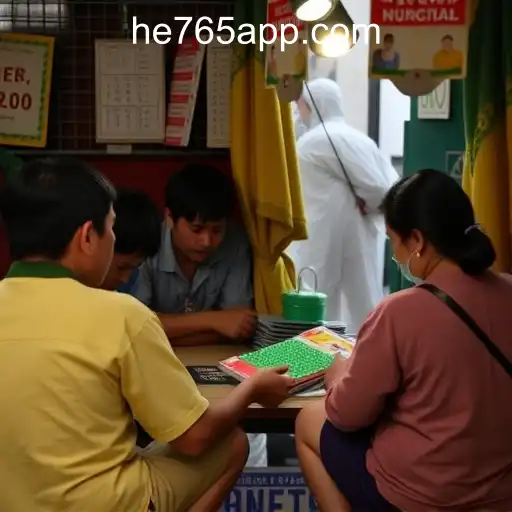
Understanding Jueteng: A Persistent Challenge
The Historical Context of Jueteng
Jueteng, a popular numbers game in the Philippines, has deep historical roots that trace back to Spanish colonial times. It's a lottery-like system where small bets on combinations of numbers can yield large payouts. Despite attempts to regulate or eradicate the game, it has endured over the decades due to its entrenched cultural significance and economic impact, particularly in rural areas.
The Mechanics of Jueteng
Jueteng operates on a fundamental premise: bettors choose a set of numbers, and if their numbers are drawn, they win. The winning numbers are typically drawn twice a day, and the game is played in many neighborhoods across the Philippines. While the game presents itself as a simple form of entertainment, underneath lies a complex web of economic and social factors that make it difficult to control.
Economic Implications of Jueteng
The economic implications of Jueteng are significant. It provides a consistent source of income for local organizers, collectors, and betting station helpers, infusing small communities with much-needed liquidity. However, this income comes at a price, often embroiling community members in illegal activities and exposing them to potential exploitation. The profitability of Jueteng is paradoxical; it offers both opportunity and oppression to those involved.
Income generation is one reason behind Jueteng's resilience. As it generates substantial revenues, these funds can be channeled into local economies, albeit illegally. The money made from Jueteng often finds its way into public projects, community events, or as bribes to facilitate lax enforcement of the law.
The Web of Corruption
Jueteng is notoriously associated with corruption. The game's existence relies heavily on a network of protection facilitated by corrupt public officials. This complicates legal efforts to dismantle the system as gains from the game are used to fund political campaigns or sway political favor, creating a cycle that is difficult to break.
In many instances, the game's operators, colloquially known as "kabos", provide bribes to officials to keep operations running smoothly. The pervasive nature of these practices highlights significant challenges in enforcing anti-gambling laws, with officials often turning a blind eye or, worse, playing a part in the operations themselves.
Social Dynamics of Jueteng
Socially, Jueteng plays a dual role in many Philippine communities. It serves as a social equalizer, providing a sense of hope and excitement through the thrill of gambling. Yet, it also fosters dependency, with some people investing more than they can afford in the hopes of winning big. This aspect of Jueteng reflects a broader cultural narrative of risk-taking and dreaming of a better life through fortune.
Community ties are strengthened through participation in Jueteng, as it becomes more than just gambling; it's a shared cultural and social activity. This deep integration into the social fabric makes it incredibly challenging to eradicate.
Impact on Families and Communities
For families, the impact of Jueteng can be both negative and positive. While for some, the winnings from a Jueteng game might mean temporary relief from poverty, for others, the losses incurred can further drive families into financial ruin. This cycle of risk and reward is a testament to the game's grip on Philippine society.
Additionally, Jueteng might also indirectly fund community events or social gatherings, making it a cornerstone of local culture in some areas. These events create jobs and provide entertainment, perpetuating the support for Jueteng despite its legal status.
Jueteng and Legal Framework
Historically, the Philippine government has attempted various strategies to eliminate Jueteng, ranging from full-scale raids to attempts at legalization and taxation. The current legal framework generally prohibits Jueteng, but enforcement remains inconsistent.
The challenge lies in balancing the game’s cultural embedment and its illegal status. Community-specific approaches have been considered, focusing on educational campaigns and providing alternative livelihood opportunities to reduce reliance on illegal gambling revenues.
The Path Forward
The path forward in dealing with Jueteng lies in a multifaceted approach that not only reinforces legal sanctions but also addresses the underlying socio-economic factors. Providing alternative sources of income through job creation, improving education, and increasing awareness about the risks of gambling may offer a sustainable solution.
Additionally, initiatives that aim to integrate Jueteng-like operations legally—by transforming them into regulated lottery systems—have been suggested. Such systems could harness the game’s popularity while protecting against the negative consequences associated with illegal gambling.